
All inclusive holidays in Egypt
Egypt’s all-inclusive resorts are a genuinely different proposition from a Spanish, Greek or Turkish beach holiday: alongside the resort itself, most trips sit within reach of the pyramids, the Nile and thousands of years of history, and the entry rules, safety picture and currency behave differently too. The label “all-inclusive” still doesn’t tell you exactly what’s covered — that depends on the specific resort, room category and tour operator — so the most useful comparison is the written inclusions and the full trip cost, not the marketing tier alone. For a broader look at how all-inclusive pricing works across destinations generally, see our guide to cheap 5-star all-inclusive holidays.
Quick answer: at a glance
- What does all-inclusive mean? Usually meals and a stated range of drinks, but the exact offer — drinks brands, à la carte limits, kids’ club hours — varies by resort and room type.
- Which region should you consider? Hurghada and Sharm El Sheikh have the widest choice of family and all-inclusive resorts; Marsa Alam and El Gouna suit divers and a quieter pace; Soma Bay leans toward golf and watersports. The individual hotel matters more than the region label.
- Do you need a visa? Most British passport holders need one — either an e-visa bought online in advance, a visa on arrival for cash, or (for short stays at Sharm El Sheikh resorts specifically) a free entry stamp. Check current GOV.UK guidance for your exact route.
- Is it safe? The Red Sea resort areas (Hurghada, Sharm El Sheikh, Marsa Alam) are treated differently from North Sinai and inland parts of South Sinai in official UK travel advice — check the live regional guidance rather than a general “is Egypt safe” headline.
- Will a package be cheaper? Not automatically. Compare the package with flights, hotel, transfers, meals and extras booked separately for the same dates and travellers.
- What may cost extra? Excursions (including any pyramids or Luxor add-on), premium drinks, spa treatments, motorised watersports, diving courses and some à la carte meals.
What does “all-inclusive” mean in Egypt?
As with other Mediterranean and Red Sea resort destinations, “all-inclusive,” “ultra all-inclusive” and “premium” are marketing labels rather than standardised, identical tiers. Treat the name as a starting point and the hotel’s own written description as the deciding reference for your exact booking.
|
Marketing label |
What may be included |
What to verify |
|
Standard all-inclusive |
Main meals, selected snacks and a stated range of local drinks |
Meal times, snack availability, drinks brands, bar hours and whether the minibar is included |
|
Ultra all-inclusive |
A wider drinks selection, longer service hours, more snack options or some à la carte meals at certain resorts |
Which drinks are included, number of restaurant visits, booking rules and any supplements |
|
“Everything included” / premium |
A broader set of dining, drinks or resort extras at some properties, sometimes including watersports or a diving taster |
Whether “everything” has exclusions, credits, reservation requirements or seasonal restrictions |
A higher tier does not automatically mean unlimited access to every restaurant, branded spirits at every bar, or free diving and watersports. One resort may include a single à la carte visit per stay while charging for additional visits; another may run a different system entirely. These are examples of possible arrangements, not universal rules — always check the actual inclusions document for your room category and dates before booking.
Compare Egypt’s main Red Sea regions
Egypt’s resort coastline runs along the Red Sea and the Gulf of Aqaba, distinct from the Nile Valley cities (Cairo, Luxor, Aswan) that most itineraries either skip or add on separately. A region can narrow your search, but it won’t tell you whether a specific hotel has a natural sandy beach, a reef reachable from the shore, or a genuine kids’ club — check the hotel itself.
|
Region |
Typical holiday setting |
May suit travellers who… |
Practical checks |
|
Hurghada |
Egypt’s largest and longest-established Red Sea resort strip, with the widest range of price points |
Want the biggest choice of family and all-inclusive resorts, and a shorter flight than Sharm El Sheikh from some UK airports |
Check the exact resort’s beach (some stretches are reef-edge with a jetty rather than a soft sandy shore), distance from Hurghada town, and transfer time |
|
Sharm El Sheikh |
A more compact resort area on the southern tip of the Sinai Peninsula, close to well-known reef sites |
Want easy access to snorkelling/diving reefs, a shorter transfer from the airport for many hotels, and the visa-free short-stay option (see entry requirements below) |
Confirm the resort’s own beach access — Sharm’s coastline is more rock/reef-based in places than Hurghada’s — and check the visa exemption applies to your exact trip length and arrival method |
|
Marsa Alam |
A quieter, more spread-out area further south, popular for diving and marine life |
Want a calmer resort atmosphere, are interested in diving or snorkelling with dolphins/reef life, or want to avoid the busiest strips |
Check flight options (Marsa Alam has its own airport, but choice and frequency are more limited), and confirm the resort’s distance from the airport |
|
El Gouna |
A purpose-built resort town north of Hurghada, built around lagoons and marinas |
Want a more contained, walkable resort town feel with restaurants and a marina alongside the beach |
Check which lagoon or beach area the hotel sits on, and whether you’ll want a buggy/taxi to move around the town |
|
Soma Bay |
A smaller peninsula resort development south of Hurghada, known for golf and watersports |
Want a self-contained resort with golf, diving or kitesurfing, rather than a wider choice of restaurants/nightlife outside the hotel |
Check what’s within the resort versus what needs a transfer, since Soma Bay is more isolated than Hurghada or El Gouna |
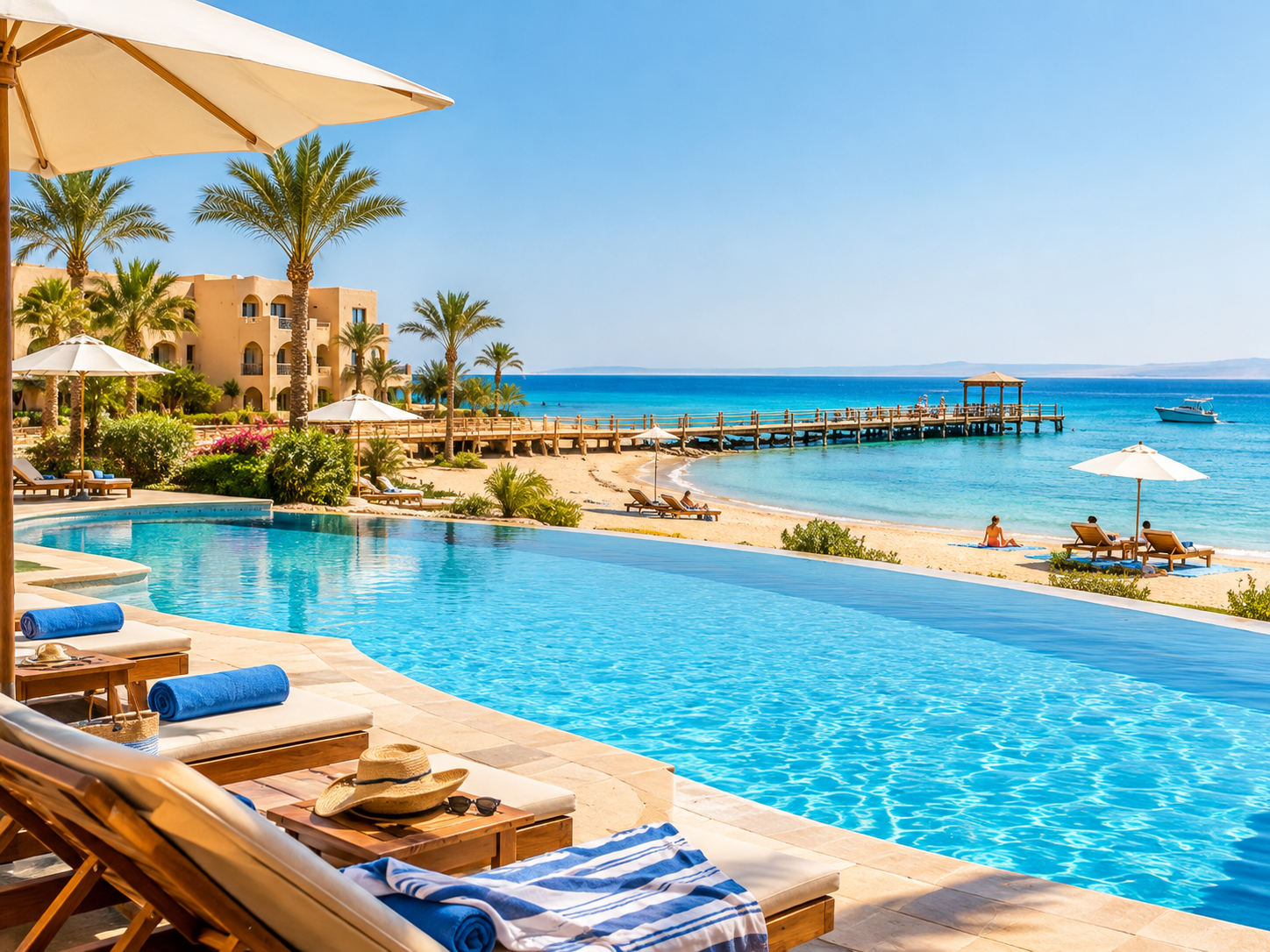
Within every region, beach conditions vary by hotel — some have soft sand, others a coral-reef shoreline with a jetty or pontoon for sea access, which affects swimming with young children. If beach type matters to you, check recent photographs and the hotel’s own description rather than relying on the region’s general reputation.

Family holidays vs couples, diving and adults-only stays
The same region works for different trip types, and the specific resort’s facilities, age policy and atmosphere usually matter more than the region label. If you’re weighing an Egypt trip against a UK-based alternative for the same budget, our guides to family vacation packages in the UK and cheap family beach holidays in the UK cover that comparison in more detail.
If you’re travelling with children, check:
- whether the kids’ club operates during your dates, which ages it accepts, and whether sessions need booking;
- whether the resort has a shallow, gently sloping pool or beach area suitable for young children, given many Red Sea beaches shelve into reef rather than sand;
- whether family or interconnecting rooms are available, and whether cots/high chairs are provided;
- how the hotel handles food safety and allergy/dietary needs at the buffet (see the food and water safety checklist below);
- whether excursions suitable for children (glass-bottom boats, gentler snorkelling spots) are offered, versus adult-focused diving trips.
If you’re travelling as a couple, for diving, or want adults-only:
Check whether the hotel is adults-only throughout or has an adults-only pool/zone only — minimum ages vary by property (commonly 16+ or 18+, but confirm the stated policy). For diving-focused trips, check whether the resort has its own PADI (or equivalent) dive centre, what’s included versus charged as an extra, and whether beginner courses or certification dives need booking in advance. Marsa Alam and parts of Sharm El Sheikh are more geared toward serious diving than Hurghada’s larger family strip, but this varies resort by resort.
Combining beach and pyramids: adding a Cairo or Luxor extension
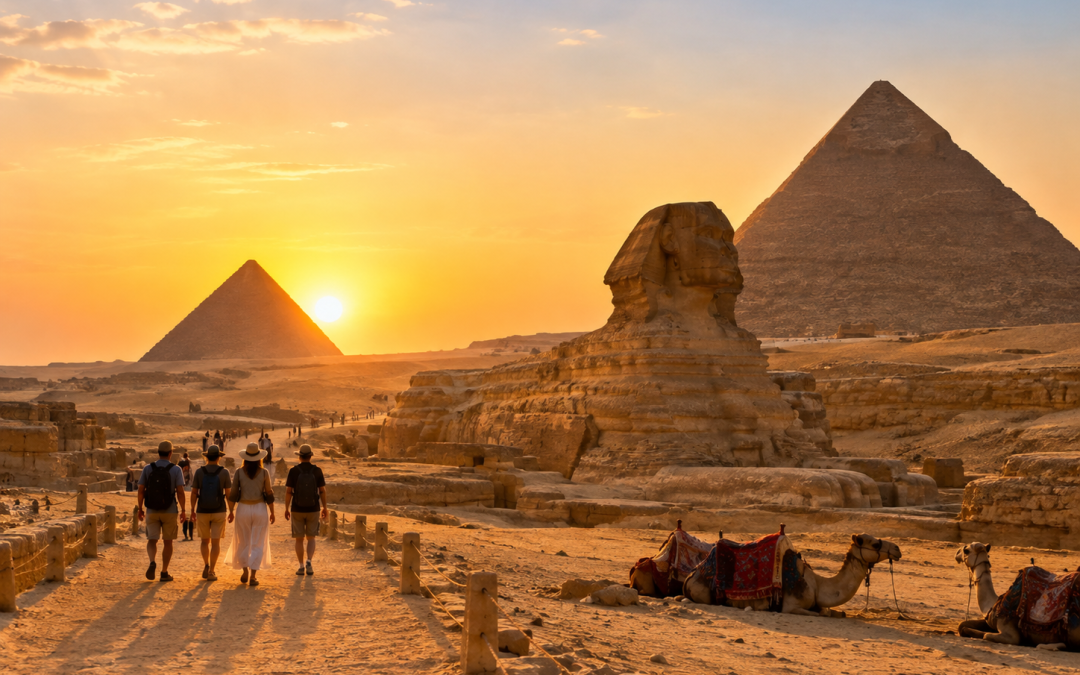
Unlike an all-inclusive holiday in Spain, Greece or Turkey, many Egypt trips are built around two very different things in one visit: a Red Sea resort stay, and Egypt’s historic sites (the Pyramids of Giza and the Egyptian Museum near Cairo, or Luxor’s temples and the Valley of the Kings further south). Some tour operators sell this as a single combined package; others expect you to book a separate excursion or add a short stay in Cairo or Luxor before or after the resort.
Practical ways this is usually arranged:
- A day excursion from a Red Sea resort — most commonly a flight from Hurghada or Sharm El Sheikh to Cairo (or occasionally Luxor) and back the same day, booked through the resort, a tour operator or an independent local operator. This is the option that adds the least extra time to a beach-focused holiday, but involves a very long day and a domestic flight.
- A stopover extension — spending two or three nights in Cairo (or Luxor) either before or after your resort stay, with a domestic flight or (for Luxor) an internal flight or overnight train connecting the two legs.
- A fully separate trip — some travellers treat the Nile Valley sites and a Red Sea beach holiday as two different visits entirely, rather than combining them.
Whichever route you choose, price it as its own line item: the domestic flight or transfer, any additional hotel nights, entry tickets for sites such as the Pyramids/Sphinx and the Egyptian Museum or Grand Egyptian Museum, and a licensed local guide if you want one. None of this is typically included in a resort’s all-inclusive board, even at a premium tier.
Booking timeline: when to compare prices
There’s no single month that guarantees the lowest price for every Egypt holiday — the total depends on school holidays, departure airport, flight availability, room category, board basis, length of stay and demand. Egypt’s Red Sea coast is marketed heavily as a winter-sun destination, so its peak demand pattern differs from a typical Mediterranean summer-holiday market; see our winter package holidays guide for how that seasonal pricing logic generally works, and our November holiday deals roundup for early winter-sun comparisons specifically.
What to check in the booking terms before paying a deposit:
- How much is due now, and when is the remaining balance due?
- What happens if you cancel or change the booking?
- Are there charges for changing names, dates or flights?
- Is the price fixed, or can any part change under the booking terms?
- What financial protection applies to the booking?
Deposit amounts and final-payment deadlines vary by provider and booking — don’t assume a generic percentage or a fixed schedule applies to every package.
Cost-planning worksheet: package vs booking separately
Use the worksheet below with live quotes, comparing the same trip rather than a package with one set of inclusions against a cheaper-looking DIY booking that leaves out baggage, transfers or the visa.
|
Cost item |
Package booking |
Book separately |
|
Flights for everyone |
Included only if stated |
£_____ |
|
Checked baggage and seat fees |
Check package terms |
£_____ |
|
Hotel for the same dates and room occupancy |
Included only if stated |
£_____ |
|
All-inclusive board |
Check exact tier and inclusions |
£_____ |
|
Visa (e-visa, visa on arrival, or Sharm El Sheikh exemption) |
Check package terms — rarely included |
£_____ |
|
Airport transfers |
Included only if stated |
£_____ |
|
Travel insurance |
£_____ |
£_____ |
|
Cairo/Luxor excursion or extension |
£_____ |
£_____ |
|
Diving, watersports or spa extras |
£_____ |
£_____ |
|
Tips, souvenirs and other spending |
£_____ |
£_____ |
|
Taxes, fees and other charges |
£_____ |
£_____ |
|
Total trip cost |
£_____ |
£_____ |
Avoid double-counting: if the package price already includes flights, hotel and board, enter that combined amount once rather than adding those components again. For a fair comparison, use the same dates, departure airport, travellers, room occupancy, baggage, transfer arrangements and equivalent inclusions.
Currency and cash: Egyptian pounds
Egypt uses the Egyptian pound (EGP). As with any destination where the exchange rate moves, a UK package quoted in pounds gives you a known price for what’s included in that booking; spending money in Egypt is different, since the amount of EGP you get for your pounds — and local prices — can both change.
A practical detail specific to Egypt: according to currency-transfer provider Wise, travellers can bring any amount of foreign currency into the country but must declare amounts over $10,000 (roughly £8,000, though check the current rate), while the amount of Egyptian pounds you can bring in or take out is capped at a much lower 5,000 EGP (roughly £80, again subject to the current rate) — breaching these limits can mean fines or confiscation. Treat this as a reason to change money after arrival or withdraw EGP from a resort/airport ATM rather than trying to source a large amount of local currency in the UK beforehand, and confirm current limits before you travel since currency-control rules can change.
A practical approach:
- Check the current GBP/EGP rate close to departure — for example via a live tool such as XE’s currency converter — though your bank or card provider’s actual rate and fees will differ from the displayed mid-market rate.
- Check your bank or card’s foreign-transaction and cash-withdrawal fees for Egypt specifically.
- Plan to obtain most of your EGP spending money in-country (ATM or exchange desk) rather than a large amount before departure, given the import cap above.
- Keep a spending buffer, since both the exchange rate and local prices can shift between booking and travel.
What may not be included in all-inclusive?
These are common things to check, not guaranteed exclusions at every resort:
- Excursions and day trips, including any Cairo/Luxor/pyramids add-on
- Premium, imported or branded drinks
- Drinks outside the stated bars or service hours
- Spa treatments and some fitness classes
- Diving courses, certification dives and some motorised watersports
- Some à la carte restaurants or visits beyond an allowance
- Minibar restocking or alcoholic minibar items
- Airport transfers, unless explicitly included
- Visa costs — almost never included in the resort or package price
- Seasonal facilities or activities not operating during your stay
Ask whether any included activity needs advance booking, has age or height restrictions, or is available only at certain times.
Food, water and health safety on an all-inclusive Egypt holiday
Food and water safety is a more common practical concern for Egypt than for many of the site’s other all-inclusive destinations, and it’s worth a checklist of its own rather than folding it into general packing advice.
- Drinking water: Stick to sealed bottled water for drinking and brushing teeth, including at the resort, unless the hotel specifically confirms its tap water is treated to a standard safe for visitors.
- Ice: Ask whether ice served at bars and restaurants is made from treated or bottled water — this varies by hotel, and it’s a reasonable question to ask rather than assume.
- Buffet food: At any buffet, favour freshly cooked, hot food over items that may have sat out, and be more cautious with raw salads, unpeeled fruit and undercooked seafood, particularly for young children.
- Travel with basic remedies: Pack rehydration sachets and any medication your GP or pharmacist recommends for travellers’ diarrhoea, and know your resort’s medical contact point in case symptoms don’t resolve quickly.
- Sun and heat: Red Sea resorts can be significantly hotter than a typical Mediterranean beach destination for much of the year — plan shade, hydration and reduced midday activity for young children accordingly.
- Travel vaccinations: Check current NHS or travel-clinic advice on recommended vaccinations and any relevant health precautions for Egypt well ahead of departure, since some are more effective with lead time.
None of this means food and water in Egypt’s resorts are unsafe by default — large all-inclusive hotels catering to international tourists generally take hygiene seriously — but it’s a genuinely different risk profile to a Spanish or Greek villa kitchen, and worth planning for rather than discovering on day one.
How to check a resort’s food and drink programme
Rather than relying only on a star rating or a handful of reviews, use this checklist alongside the hotel’s own description and your tour operator’s package details.
- Main meals: Are breakfast, lunch and dinner included every day, and what are the service hours?
- Buffet and alternatives: Is there a buffet at each meal, and which other restaurants are included?
- À la carte rules: How many visits are included? Do you need to reserve, and are there supplements?
- Snacks: Where are snacks served, and during what hours?
- Drinks: Which brands and types are included, and are the rules different at the pool bar, lobby bar and late-night bar?
- Minibar: Is it stocked on arrival, and what’s included in refills?
- Dietary needs: How should you notify the hotel about allergies or dietary requirements, and what can it confirm in advance?
- Water and ice: Ask directly whether tap water and ice are treated to a standard the hotel considers safe for international guests (see the safety checklist above).
- Room and package match: Do the hotel’s terms apply to your exact room category and the package you’re buying?
Common scams and in-resort upsells: how to avoid overpaying
Not every paid offer is a scam — excursions, upgrades and premium services can be legitimate extras. The issue is whether the price, terms and optional nature are made clear.
- Pause before buying an excursion, especially a Cairo/Luxor add-on. Compare the itinerary, provider, total price, transport, cancellation terms and what’s included.
- Ask for the full price and currency, and confirm whether a quoted amount is per person or per group.
- Check “compulsory” charges. If someone says an upgrade, transfer or guide fee is mandatory, compare that claim against your booking confirmation and ask your tour operator.
- Use registered or recommended transport and guides, particularly for trips outside the resort — confirm the price and destination before starting a journey.
- Keep receipts and confirmations for anything you book locally.
- Avoid pressure to decide immediately — if an offer can’t be explained clearly, take time to check it.
For current safety and security information, use the UK government’s Egypt travel advice rather than resort hearsay or old social-media posts.
Practical planning: visas, safety and when to visit
Visa and passport requirements
Per the UK government’s current Egypt entry-requirements page, your passport must have an expiry date at least 6 months after the date you arrive, and at least one blank page. British passport holders normally need a visa to enter Egypt, with several routes:
- E-visa — applied for online in advance, valid for stays of up to 3 months.
- Visa on arrival — available at approved airports for $30 US dollars, cash only, valid for up to 30 days.
- Digital visa at Cairo International Airport — introduced from 1 August 2026, priced at $36 US dollars (including a $6 digital service fee), applied for via self-service machines or an online portal.
- Sharm El Sheikh exception — travellers arriving by air and staying under 15 days at Sharm El Sheikh resorts specifically can receive a free entry stamp without a separate visa; check this applies to your exact arrival point and length of stay before assuming it covers you.
- In person — through the Egyptian Consulate General in the UK before you travel.
Visa costs and rules can change, and different rules may apply to other nationalities or travel purposes — check the live GOV.UK guidance for your own circumstances before booking and again before departure.
Egypt travel advice and regional risk
Official UK travel advice treats different parts of Egypt very differently, so a single “is Egypt safe” headline is the wrong question. Per the FCDO’s regional-risks guidance for Egypt, the government advises against all travel to North Sinai Governorate, and against all but essential travel to the northern part of South Sinai Governorate beyond the St Catherine–Nuweibaa road (with an exception for the coastal areas on the eastern and western sides of that stretch). By contrast, the same guidance describes travel to Red Sea tourist areas — including Sharm El Sheikh, Hurghada and Marsa Alam — as generally low risk, noting that security forces carry out routine checks on vehicles and at airports serving these resorts.
Read the full Egypt travel advice for your specific itinerary — including any Cairo, Luxor or desert excursion — rather than assuming resort-area guidance covers a side trip elsewhere, and check it again close to departure since advice can change.
Best time to visit
Egypt’s Red Sea coast is warm for most of the year and is marketed heavily as a winter-sun destination, which is a different seasonal pattern to the site’s Mediterranean guides:
- Winter (roughly November to March): milder daytime temperatures than summer, a popular period for UK travellers seeking sun without the most intense heat — see our winter package holidays guide for how winter-sun pricing generally behaves.
- Summer (roughly June to September): significantly hotter, which can be intense for young children and older travellers around midday; check the specific resort’s shade, pool and air-conditioning provisions if travelling in peak summer.
- Shoulder months (April–May, October): worth comparing for a balance of warmth and lower peak-season demand, though conditions and prices still vary by resort and year.
Don’t assume any single month is automatically cheapest or coolest — compare live prices and current weather expectations for your specific dates and region.
Financial protection and insurance
For a UK flight-inclusive package, check whether it’s ATOL-protected and read the documents supplied with the booking. ATOL protection is financial protection for qualifying flight-inclusive package holidays; it’s separate from travel insurance. Travel insurance should be checked separately — confirm it covers your planned activities (including diving, if relevant) and any personal circumstances, and understand its exclusions and emergency-assistance process.
Step-by-step: how to book an all-inclusive Egypt holiday
- Set your trip basics: dates, departure airport, party size, children’s ages, room needs and total budget.
- Shortlist regions: use the regional comparison to narrow the search, then check the actual resort’s beach type and location.
- Decide whether you want a Cairo/Luxor extension or excursion, and price it separately from the resort stay.
- Compare specific hotels: check the beach, transfer time, room category, age policies and facilities.
- Read the all-inclusive terms: verify meals, drinks, restaurant limits, snacks, minibar, bar hours and seasonal availability.
- Compare full costs: use the worksheet above for a package and equivalent separate bookings, including the visa.
- Read the contract: check deposit, final payment, cancellation, changes and what happens if flights or services change.
- Check protection: confirm the financial protection that applies and keep the relevant certificate or booking documents.
- Sort your visa and passport: apply for an e-visa in advance, or confirm you qualify for visa-on-arrival or the Sharm El Sheikh exemption.
- Check the live GOV.UK travel advice for your full itinerary, and plan food/water safety and sun protection for the specific season you’re travelling in.
Pros and cons of all-inclusive Egypt holidays
|
Potential advantages |
Things to consider |
|
Meals and selected drinks can make day-to-day spending easier to plan |
The label doesn’t guarantee the same inclusions at every resort |
|
Warm weather across most of the year, including a genuine winter-sun option |
Summer heat can be intense for young children; check shade and air-conditioning |
|
Easy access to genuinely distinctive sites (pyramids, Luxor, Red Sea reefs) alongside the resort |
Excursions and extensions are almost never included in the resort price |
|
A package can combine flights, accommodation, board and sometimes a visa in one booking |
A package is not automatically cheaper than booking separately, and visas are rarely bundled |
|
Red Sea resort areas are treated as low risk in official UK travel advice |
Regional risk varies sharply within Egypt — check advice for your full itinerary, not just the resort |
Frequently Asked Questions
Is Egypt safe for an all-inclusive family holiday?
Official UK travel advice treats Red Sea resort areas such as Sharm El Sheikh, Hurghada and Marsa Alam as generally low risk, while advising against travel to North Sinai and parts of inland South Sinai. Check the current FCDO regional-risks guidance for your resort and full itinerary, including any excursions, rather than relying on a general “is Egypt safe” impression.
Do UK citizens need a visa for Egypt?
Most British passport holders do. Options include an e-visa bought online in advance (valid up to 3 months), a $30 cash visa on arrival at approved airports (valid up to 30 days), a newer digital visa at Cairo International Airport, or — for short stays specifically at Sharm El Sheikh resorts arriving by air — a free entry stamp with no separate visa. Check the current GOV.UK entry requirements for your exact circumstances.
Is alcohol included at all-inclusive Egypt resorts?
It depends on the resort and tier — many include a stated range of local drinks, with premium or imported brands often charged separately. Some resorts and areas are more alcohol-limited than others; check the hotel’s own written inclusions rather than assuming from the “all-inclusive” label alone.
Is the water safe to drink at an all-inclusive resort in Egypt?
Stick to sealed bottled water for drinking, and check with the hotel about ice and tap water treatment standards. Most large international resorts take food and water hygiene seriously, but it’s a genuinely different risk profile to many of the site’s other all-inclusive destinations, so it’s worth checking rather than assuming.
What’s the best time of year for an Egypt all-inclusive holiday?
Egypt’s Red Sea coast is warm for most of the year and is commonly marketed as a winter-sun destination (roughly November to March), with a much hotter summer (June to September) that can be intense for young children. Compare live prices and weather expectations for your specific resort and dates rather than assuming one month suits every traveller.
Is an Egypt all-inclusive holiday cheaper than Turkey?
There’s no single answer — it depends on the resort, dates, room category, flight cost from your departure airport, and how you value inclusions like a visa or an excursion to the pyramids. Compare live, like-for-like quotes for both destinations rather than relying on general reputation.
Can I visit the pyramids from a Red Sea resort?
Yes, commonly as a day excursion (often involving a domestic flight from Hurghada or Sharm El Sheikh to Cairo) or as a separate stopover extension before or after your resort stay. This is rarely included in the resort’s all-inclusive price — budget and book it as its own item.
Final verdict
An all-inclusive holiday in Egypt can offer genuinely distinctive value — warm weather across most of the year, Red Sea reefs, and easy access to some of the world’s best-known historic sites — but it comes with planning steps that don’t apply to a typical Spanish, Greek or Turkish package: sorting a visa, checking regional travel advice rather than a single safety headline, and budgeting food/water precautions and any pyramids excursion separately from the resort price.
For a fair comparison, price the same trip as a package and as separate bookings, including the visa and any Cairo or Luxor extension you want. Check your passport and the live GOV.UK travel advice for your full itinerary, confirm any important resort inclusion in writing, and choose the booking whose verified terms and total cost fit your own trip.
If you’re comparing Egypt against other package destinations, see our guides to cheap 5-star all-inclusive holidays and winter package holidays; for a family-specific comparison, see family vacation packages in the UK.
Sources
- UK government: Egypt travel advice
- UK government: Egypt entry requirements
- UK government: Egypt safety and security
- UK government: Egypt regional risks
- ATOL: What ATOL protection covers
- Wise: Taking cash in and out of Egypt
- XE: Currency converter
Visa costs, currency limits, hotel inclusions and travel advice should be checked again when you obtain a quote and close to departure — all of them are the kind of detail that changes without much notice.